1. The Problem With Traditional Buy-and-Hold
Owning a Good Company Doesn't Protect You From a Falling Stock Price
Imagine you discover a company you believe has an excellent future. You research its business, examine its financial performance, and decide to invest.
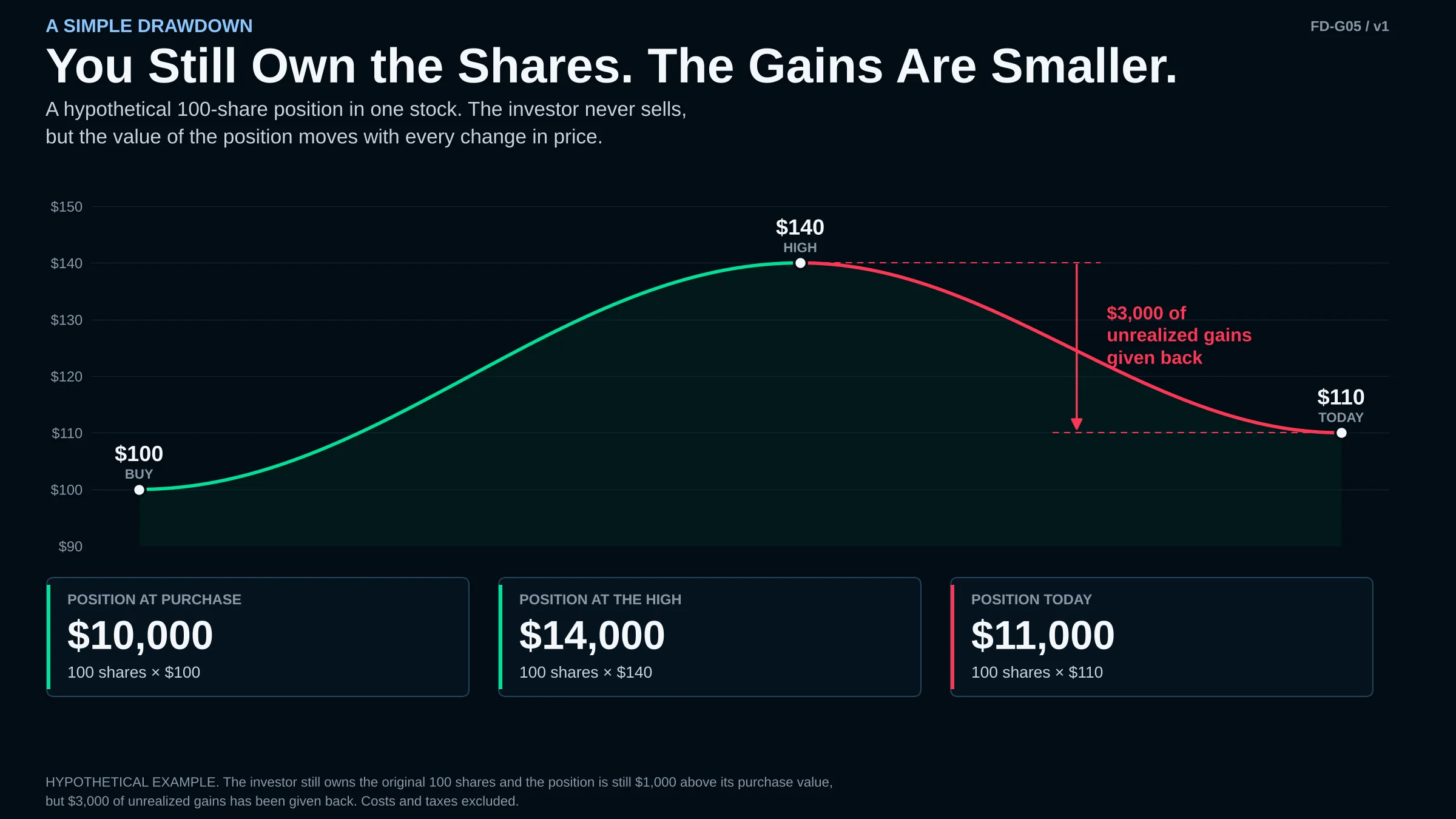
You buy 100 shares at $100 each. Your investment is worth $10,000.
Over the next several months, the stock climbs to $140. Your investment is now worth $14,000.
You have a $4,000 unrealized gain.
Then something changes.
Perhaps the broader market begins selling off. Perhaps investors become nervous about the technology sector. Or perhaps the stock simply enters a period of declining prices.
The stock falls to $110.
You still own the same 100 shares, but your investment is now worth $11,000. You've given back $3,000 of your earlier unrealized gains. Your shares remain worth $1,000 more than their original purchase price.
And here's the difficult part: You may still believe in the company just as much as you did before.
So what do you do?
You could sell your shares and preserve what's left of your gain. You could continue holding and accept the possibility of further declines. Or you could consider another approach.
What if you could keep owning the company while reducing your exposure to additional losses?
That's the problem the FlowDM Method was designed to address.